

Three fires, in three registers. In 2023, wildfires burned about 15 million hectares of Canada, more than doubling the previous record, and for one season the boreal forest that normally locks carbon away became one of the largest carbon sources on Earth 59. Every dry season, more than half of all the land that burns worldwide burns in Africa, most of it savanna set alight on purpose by people who have used fire to manage grazing land for millennia 3332. And in July 2022, near Bordeaux, an agricultural burn that got away grew into one of France's worst wildfires, driving tens of thousands from their homes and smouldering underground in the peat for months. A catastrophe, a routine, and an accident. Very different fires, and one question under each of them.
That question is what a fire leaves in the soil, and how much of it comes back. It is the same question whether the fire was wild or deliberate, in a forest or a field, because a farmer clearing land with a match and a landscape-scale wildfire are the same chemistry at different scales. Both put heat into soil, and the soil keeps the receipt. With a hotter, drier climate we are seeing more of the uncontrolled kind: fires that spread further, burn hotter, and return more often, as the frequency of high-severity fire and the total area burned have both climbed since the 1970s 19. The honest answer has three timescales and one recurring caveat: it depends almost entirely on how hot the soil got, and for how long.
Fire is not one thing: what the soil actually feels
The first thing to separate is the fire in the air from the fire in the ground. Fireline intensity, the wall of flame and the plume, is what we watch and fear. But soil sits underneath, and soil is a poor conductor of heat. It is, in effect, its own insulation. A global compilation of measured soil temperatures during real wildfires and prescribed burns found that most fires heat only the uppermost centimetres, and that below half a centimetre depth, temperatures rarely climb past 300°C 3. The exception is deep smouldering fuel, a peat layer or a thick duff mat or a stacked log, which can burn low and slow for hours or weeks and drive the heat far deeper. That is what kept the Gironde ground alight for months, and what let the 2023 Canadian fires burn down into peat and permafrost, releasing carbon from soil layers a passing surface flame would never reach 9.
At the surface, the numbers are violent. Shrubland wildfires have been recorded near 964°C at the ground, and the complete combustion of stacked logs in an Oregon pine stand averaged 759°C at the surface with peaks past 1100°C 36. Yet even under those mega-logs, temperatures lethal to roots and soil organisms reached about 10 cm down and no further, with nothing measurable at 30 cm 6. The heat is real, but it is shallow, and it is brief. This matters because most laboratory studies hold soil at a fixed temperature for half an hour or an hour, far longer than a passing flame front, and so tend to overstate what happens in a real field 3.
The single biggest control on how deep the heat travels is water. Wet soil spends the fire's energy boiling water off the surface rather than passing it down. In controlled burns of woody fuel, a soil at 20% volumetric moisture or wetter quenched the lethal heat pulse at 2.5 cm and below, while the same soil bone-dry carried lethal temperatures to 10 cm 4. A dry-season fire and a wet-season fire on identical ground are, from the soil's point of view, two different events. So are the thresholds worth holding in mind. Around 60°C, sustained, is enough to kill roots and most soil organisms, though that number is a rule of thumb rather than a hard line, since organisms vary and duration matters as much as peak 78. Organic matter starts to combust between roughly 200 and 300°C, and nitrogen begins to volatilise and leave as gas from about 200°C upward. Push past 450°C and the organic carbon in that layer is essentially gone.
Move the dials and the lesson lands quickly. A ferocious surface temperature over dry soil sends the kill zone several centimetres down and burns the carbon out of the top layer. The same fire over a moist soil barely touches anything below the surface skin. This is why fire severity, defined by soil scientists as the loss of organic matter above and below ground, is a far better predictor of what happens to soil than the height of the flames.
The first year: ash, a nutrient flush, and water that will not soak in
In the weeks after a fire, the soil surface can look, on paper, improved. Ash is alkaline and rich in the mineral nutrients that were locked in the burnt biomass, so a burned topsoil often shows a jump in pH and a flush of available potassium, calcium, magnesium, phosphorus, and ammonium nitrogen 122. This is the grain of truth inside the old farmer's intuition that burning “feeds” the land. For a season, on a low-severity burn, it can. Seeds of many fire-adapted plants are cued to germinate by the chemistry of smoke and char, and the cleared, fertilised, sunlit ground is briefly a good place to be a seedling 19.
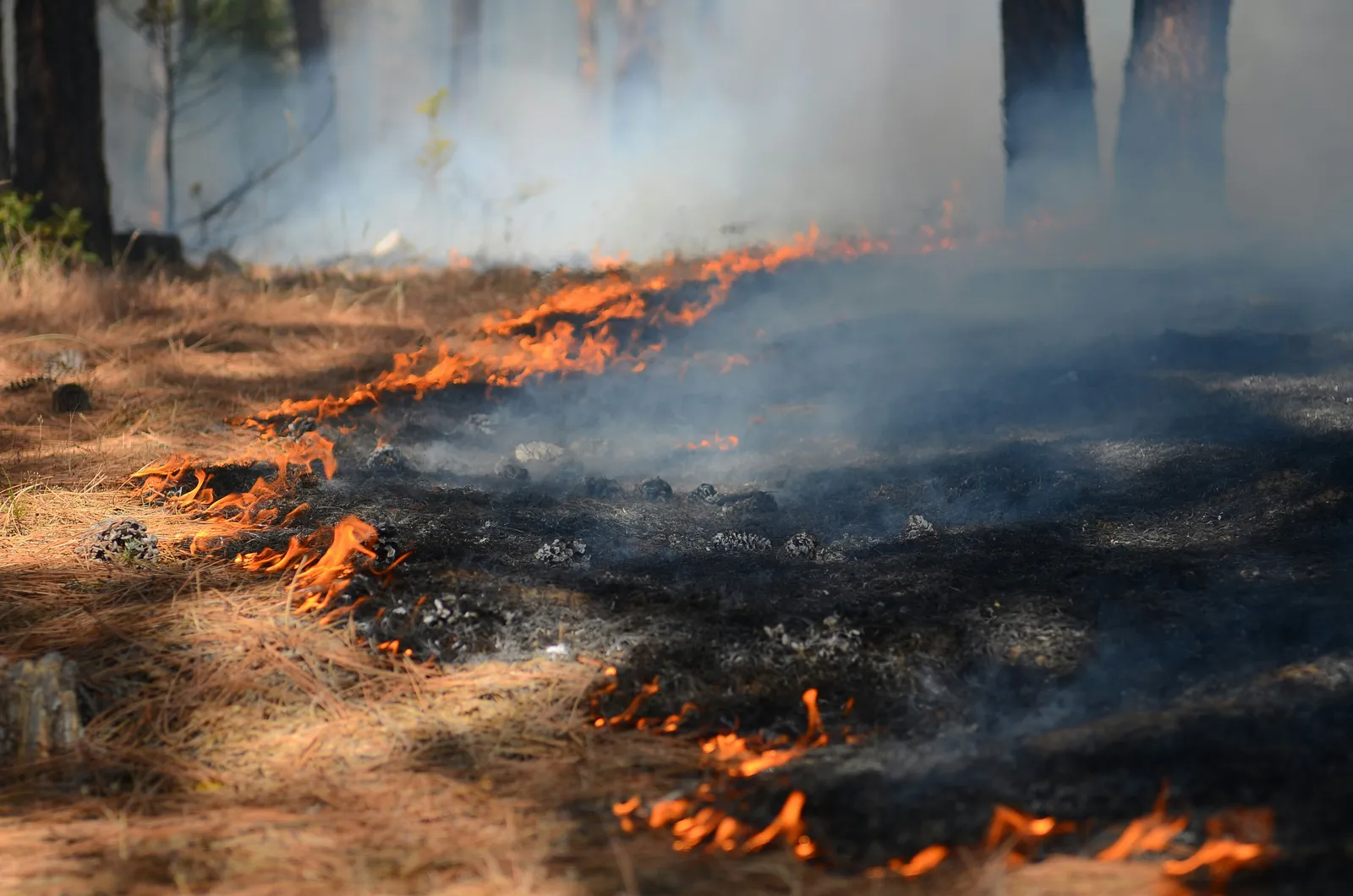
Fig 01A surface fire creeps through pine litter, leaving a sharp line between blackened and untouched ground. Low-intensity fires like this feed the first year's ash flush while barely heating the soil beneath.
Photo // Emma RenlyThe catch is that this flush is a withdrawal, not a deposit. The nutrients in the ash were already in the system, held in plants and litter and slowly cycling. Fire converts a slow, retained stock into a fast, mobile pulse, and a good deal of it does not stay. Nitrogen and sulfur are the clearest losses: they volatilise in the flame and leave the site as gas, which is why a global meta-analysis of nearly 300 field studies found soil nitrogen down about 15% after fire, alongside a similar drop in soil carbon 2. The ammonium spike is real, but the total nitrogen capital of the soil has usually fallen.
The more consequential first-year change is physical, and it is nearly invisible. When organic matter burns, some of the vapour it gives off recondenses onto cooler soil particles a little below the surface and coats them in a waxy, water-repellent film. The result is a hydrophobic layer, usually sitting two to four centimetres down, that stops rain soaking in. On four recent Californian megafires, the time it took a water drop to penetrate the soil went from under a second before the fire to more than ten minutes after it 11. This repellency is strongest after high and moderate severity fire, and, left alone, it fades on its own as wetting and freezing break the waxes down, usually becoming undetectable within about a year 10. For that one year, though, the soil has quietly lost much of its ability to accept water. Everything difficult about the medium term follows from that.
The middle years: the soil that leaves
If the first year is about chemistry, the next few years are about gravity. A burned slope has lost the canopy, litter, and roots that used to intercept rain and hold the surface together, and underneath it may have a layer that sheds water instead of absorbing it. The first intense storm after a fire meets a surface primed to run rather than soak, and it carries the soil with it. This is the single most damaging medium-term consequence of fire, and it is the one that turns a recoverable event into a degraded one.
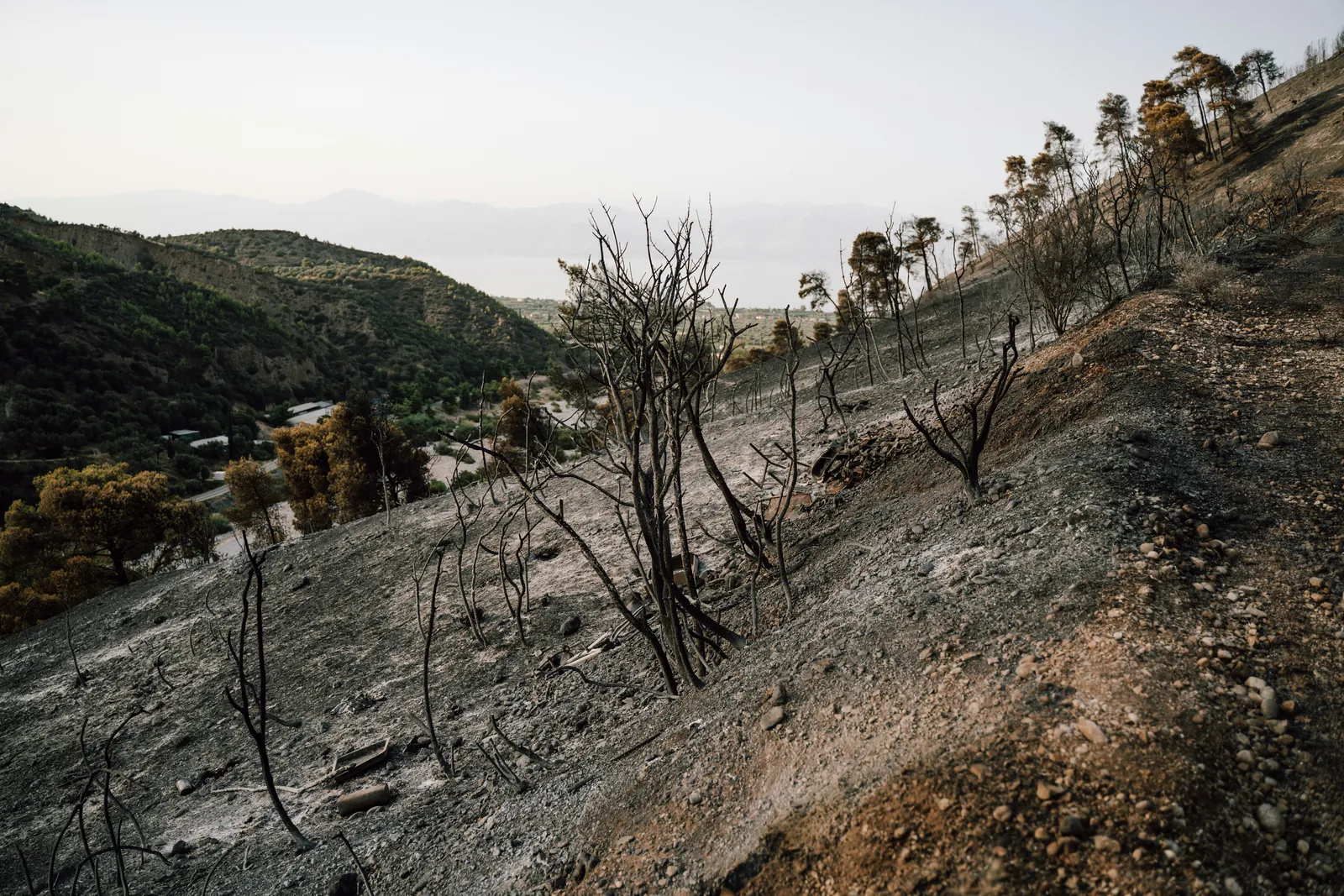
Fig 02Weeks after a severe fire on a Mediterranean slope: bare ash, dead stems, and nothing left to hold the surface. The first heavy rain on ground like this is what carries the soil downhill.
Photo // Elisabeth JurenkaThe magnitudes are large. On severely burned hillslopes in Colorado, sediment yield over the first five years averaged 32 tonnes per hectare, against essentially nothing from neighbouring unburned slopes 12. A Montana study measured 1157 grams of soil lost per square metre in the year of the fire, falling back toward background as the ground revegetated over the following years 13. Across Mediterranean sites, runoff rose by 150 to 375% and soil loss by 100 to 800% immediately after burning 15. When people downstream talk about post-fire debris flows and fouled reservoirs, this is the soil they are talking about, arriving all at once.
Here is the part that changes what you do about it. For years the water-repellent layer was blamed for post-fire erosion, but careful field experiments that separated the two factors found that the loss of protective ground cover mattered more than the repellency itself 12. Ash and cover shield the soil surface from raindrop impact and stop it sealing into a crust; strip that cover away and the soil erodes whether or not it is repellent. That is good news, because cover is something you can restore, and it points straight at the intervention that works.
The tool makes the priority visible. Slope sets the stakes, but cover sets the outcome. A bare, steep, burned hillside can shed tens of times the soil of an intact one, and the fastest way to pull that number down is not to fight the slope but to put cover back on the ground before the first big rain.
The long shadow: what fire leaves for good
Over decades, fire keeps two ledgers in the soil, and they point in opposite directions. On the debit side is lost organic matter. That 15% average drop in soil carbon is not always recovered, and under repeated fire the loss compounds: in Mediterranean pine stands burned twice, the entire organic surface horizon had disappeared, and the labile, easily-cycled carbon fractions in recurrently burned soils fell by up to a third 220. Frequent fire, with too little time between events for the litter layer and the microbial community to rebuild, is how a soil is ground down. At the scale of a whole biome the debit can be staggering: the 2023 Canadian fire season released on the order of 650 million tonnes of carbon, much of it from burning organic soils rather than trees, and flipped the boreal forest from a carbon sink into a source for the year 9.
On the credit side is a peculiar and durable gift: pyrogenic carbon. Incomplete combustion turns a small fraction of the burnt biomass, on the order of a few percent, into charcoal and other char residues whose fused, aromatic structure resists decay 17. This is the same material, in essence, as the biochar deliberately added to soils, and we treat its accounting in detail in Biochar: Carbon Removal, Soil Response, and the Accounting Question. That global meta-analysis found pyrogenic carbon rising by about 40% after fire even as total carbon fell 2. Roughly half of the pyrogenic carbon produced by vegetation fires is thought to persist for centuries 16, and in fire-shaped savannas it can make up 14% of all the soil carbon, and locally as much as 40% 18.
The clearest evidence that char can build soil rather than only mark its destruction sits in the Amazon. Scattered across the basin are patches of terra preta, dark and fertile anthropogenic soils that pre-Columbian people created, in part, by working charcoal into otherwise poor ground. Centuries later those soils still hold up to seventy times more black carbon than the earth around them, and they are still fertile, because the oxidised char surfaces cling to the nutrients that tropical rain would otherwise wash away 31. It is the plainest demonstration that pyrogenic carbon can be both durable and useful. The catch is in how it was made: terra preta came from cool, smothered, charcoal-making fires, not the hot open burns that dominate today.
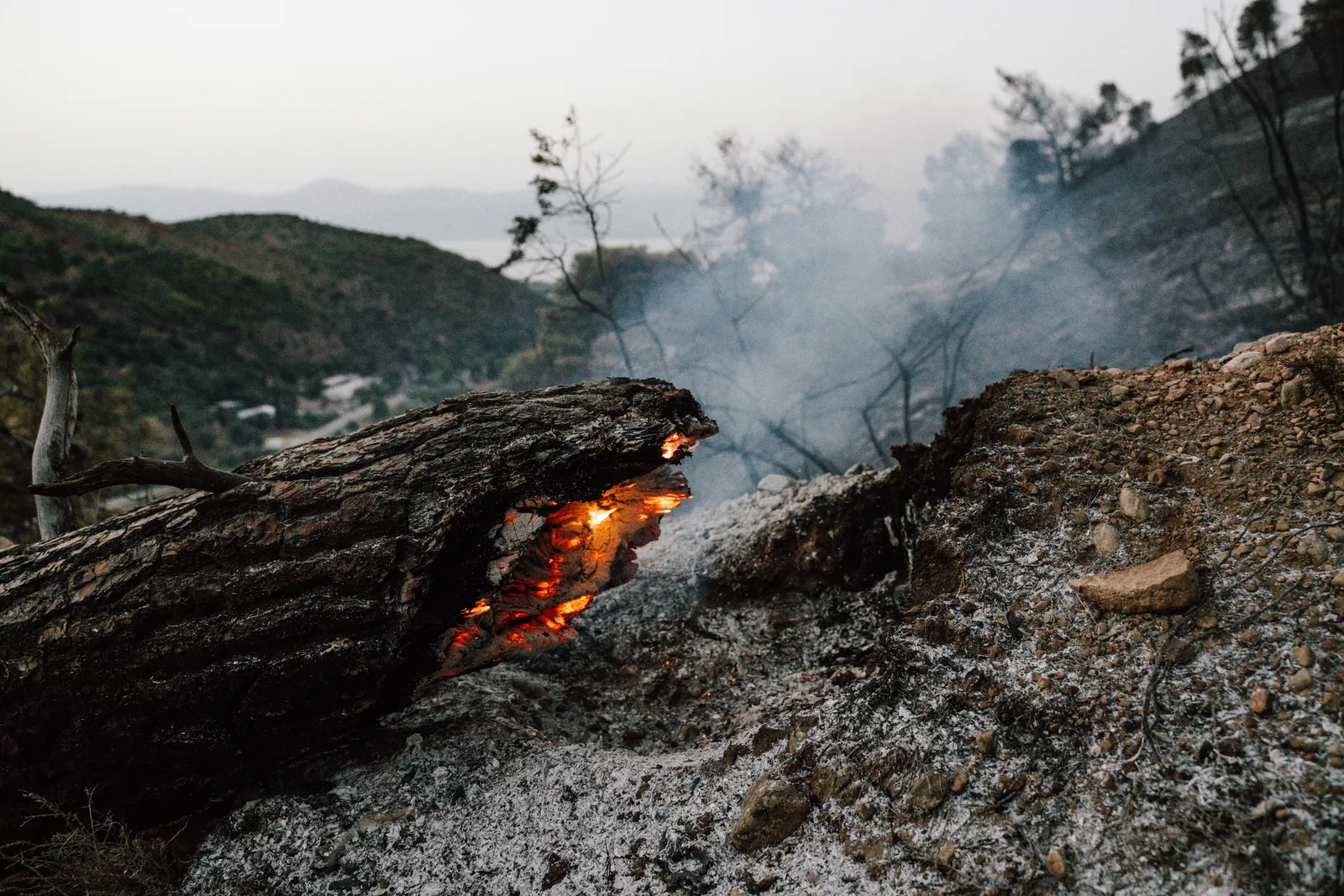
Fig 03A fallen trunk smoulders down to ember and pale ash long after the flame front has passed. Slow, oxygen-starved burning like this is how a fraction of the wood becomes charcoal, the pyrogenic carbon that can persist in soil for centuries.
Photo // Elisabeth JurenkaIt is tempting to read that as fire storing carbon for us, and some accounting has leaned that way. I would be careful. Pyrogenic carbon is stable, not eternal: careful turnover estimates put its slow pool in the region of centuries, roughly 800 years, not the millennia often assumed, and repeated fires slowly consume the char already on the ground 17. The honest reading of the long term is that fire shifts soil organic matter toward a smaller total but a more stable form. In a system that burns lightly and rarely, that is part of how the soil works. In a system that is now burning hotter and more often, the losses on the debit side are outrunning the slow, stable gains on the credit side.
The recovery tool carries the article's central claim in miniature. That same meta-analysis found soil carbon and nitrogen returning to pre-fire levels about ten years after fire on average, sooner than many people assume 2. But an average hides its tails. A low-severity burn on a protected site is back to baseline within a few years. A high-severity burn on a bare slope, bleeding carbon downhill with every storm, may settle decades later at a permanent deficit. The difference between those two futures is mostly the difference between doing nothing and protecting the ground.
The farmer's fire: slash-and-burn and stubble
Not all deliberate fire is the same. Two of the oldest farm fires on Earth do almost opposite things to the soil beneath them, and it is worth taking them separately, because one can be a workable bargain and the other is mostly a slow loss.
Slash-and-burn: the oldest bargain
Across the tropics, from the Amazon to the Congo Basin to the uplands of Southeast Asia, hundreds of millions of people still farm by shifting cultivation: fell a patch of forest, let it dry, burn it, and crop the clearing for a few years before moving on and leaving it to grow back. The fire is deliberate, and its first effect on the soil is the ash flush we have already met, a genuine pulse of nutrients and a rise in pH that carries the first crops 27. Done at low intensity on a long cycle, it is one of the oldest sustainable ways to farm a poor tropical soil.
The bargain only holds if the fallow is long enough. Burning volatilises almost all of the carbon and nitrogen held in the felled vegetation, on the order of ninety-five percent, so the nutrients that reach the soil are bought at the expense of the far larger stock that goes up in smoke 30. Whether the system stays in balance or is slowly mined comes down to whether the fallow years put back what the cropping years and the fire take out 28. Where population pressure shortens the fallow, the balance tips from equilibrium to depletion. In the eastern rainforests of Madagascar, fallow periods fell from eight to fifteen years down to three to five within a few decades, and each fire favoured tough, fire-loving grasses over returning trees, until forest gave way to treeless grassland of little use to anyone 29. That is the wildfire lesson again, in a farmer's hands: the regime decides the outcome, not the single fire.
There is a version of this fire that builds soil instead of mining it, and the difference is ash versus char. A hot, open burn turns biomass mostly into gas and a little short-lived ash. A cool, smothered, oxygen-starved burn turns it into charcoal, the durable pyrogenic carbon behind the terra preta soils. This is why “slash-and-char” is being revisited as an alternative to slash-and-burn, and it is the same idea as biochar, which we cover in Biochar: Carbon Removal, Soil Response, and the Accounting Question. The fire is the same tool; the outcome depends on how you let it burn 31.
Stubble: subtraction by fire
The other farm fire is the one lit to clear crop residue after harvest, and it is a milder animal. Stubble burning is fast, usually lit when the soil below still holds some moisture, and over in minutes, so the immediate blow to the soil is often small. A study of rice-stubble burning in central Thailand found the fire simply was not hot enough to shift the soil bacterial community right afterward, though the ash still raised pH and nutrients for a while 22. If a stubble fire were a one-off, its main cost would be the smoke, not the soil.
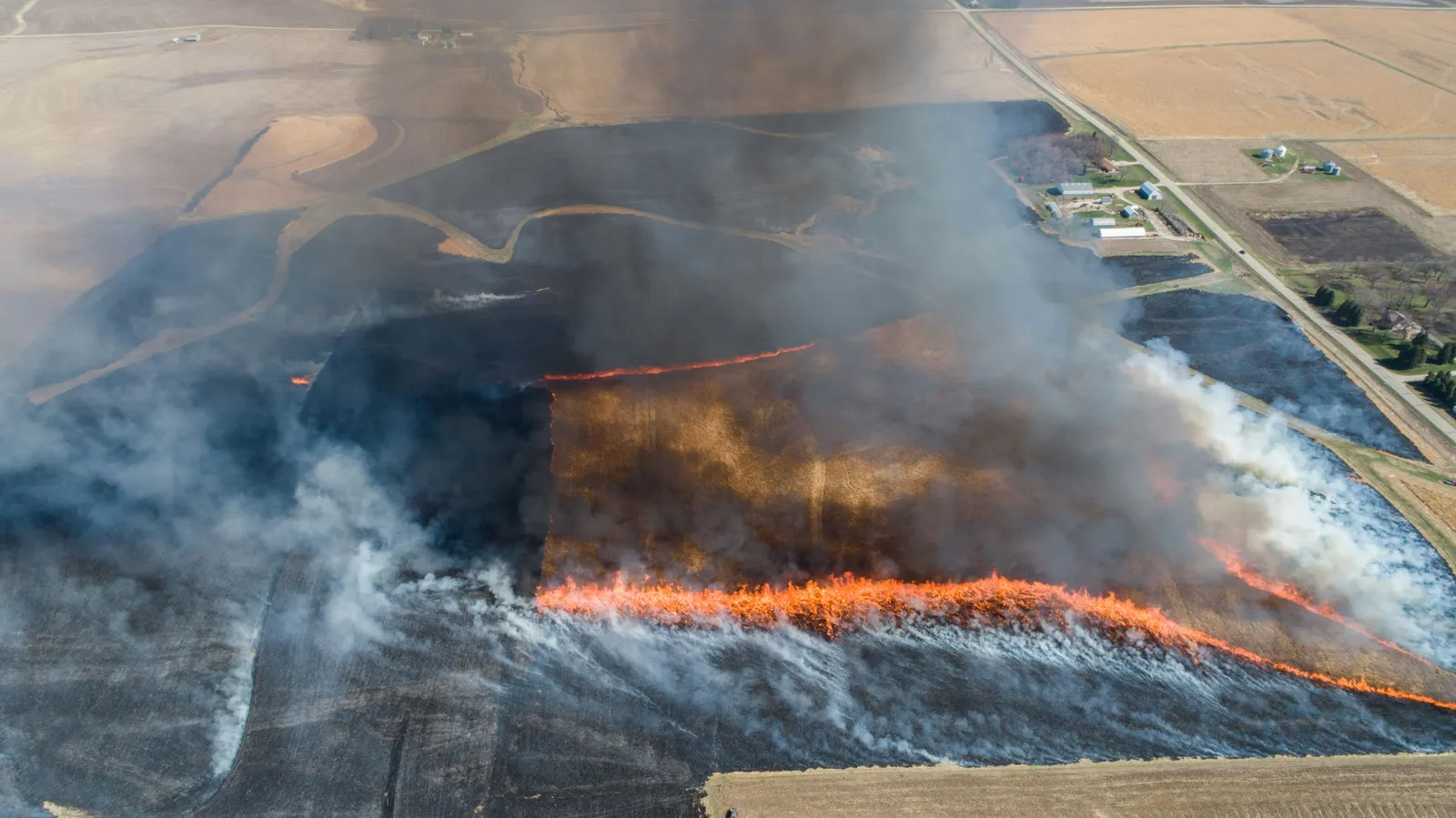
Fig 04A deliberate burn runs the edge of a harvested field, the flame front sharp against the dry stubble. Fast and low, but repeated every season it removes the residue that would otherwise have rebuilt the soil.
Photo // Josh BerendesIt is never a one-off, and its damage is slow and cumulative, working by subtraction. Every tonne of straw burned is a tonne of carbon and nutrients that would otherwise have fed the soil as it broke down, sent up as smoke instead. In the rice-wheat plains of northern India, where only a couple of weeks separate one crop from the next, something like 116 million tonnes of residue are burned in a single year, taking billions of kilograms of organic carbon out of the soil budget and filling the air with reactive nitrogen and fine particulates 2425. Trials that compare burning with returning the straw show the cost in the soil plainly: microbial biomass and respiration cut by roughly half and a third under burning, with a clear signature of microbial stress where the residue is torched rather than left 2623.
Regulators from the European Union to India restrict open residue burning, unevenly and with mixed success, because the arithmetic rarely favours it. A burn set to save two weeks of work trades a durable asset, the residue that would have become soil organic matter, for a one-off convenience, and now and then, on the wrong day in the wrong wind, for a wildfire like the one that opened this article.
Positive or negative? It depends on the regime, not the event
So is fire good or bad for soil? The question has no single answer because it is aimed at the wrong unit. A single fire is neither. Savannas, many pine forests, Mediterranean shrublands, and boreal woodlands evolved with fire and depend on it, and a light burn in those systems can be neutral or even restorative, clearing litter, cueing germination, and returning nutrients to the surface 719. Soil life is well adapted to survive it. Organisms shelter in the cool soil below the killing layer and recolonise from there, provided the land use does not change and vegetation comes back before the soil washes away 7.
Africa makes the point at continental scale. More than half of all the land that burns on the planet each year is African savanna, and almost all of it is lit deliberately, season after season, by people managing grazing and land 3332. These are not soils being destroyed. They are soils that have burned on a regular beat for so long that the grasses, the scattered trees, and the microbes are built around it, and much of their carbon sits safely below ground, out of the flames' reach. Fire here is closer to mowing than to catastrophe, which is also why simply suppressing it is no easy climate win.
What decides the outcome is the regime, not the event: how severe the fire, how often it returns, and what follows it. Turn any of those dials the wrong way and a survivable disturbance becomes lasting degradation. This is precisely what a warming climate is doing. A global synthesis found fire's damage to soil biogeochemistry concentrated in cold climates, conifer forests, and wherever fires are becoming more intense and more frequent, with some of the effects persisting for decades 21. The danger is not that fire is new to these landscapes. It is that the fire is arriving hotter, larger, and more often than the soil evolved to absorb, and with less time to recover in between.
What you can actually do: measure, stabilise, restore
The practical response falls into three moves, in order. The first is to measure, because “the soil is fine” and “the soil is ruined” are both guesses until someone checks. Burn severity can be mapped from satellite imagery, using the difference in the normalised burn ratio before and after the fire, to target where the ground was hit hardest. On those areas, a handful of field measurements tells you what you are dealing with: soil carbon and nitrogen on an equivalent-mass basis so a change in bulk density does not fool you, a water-drop penetration test for repellency, which takes minutes, and a simple infiltration test. We work through the sampling logic behind that kind of before-and-after comparison in How Large Should Your Soil Carbon Sampling Campaign Be?
The second move is to stabilise, and the window is short. The erosion tool already gave away the answer: get cover back on the ground before the first heavy rain. A systematic review of post-fire treatments found that mulching works, that straw and wood mulch outperform sprayed hydromulch, and that the benefit is greatest exactly where it is needed most, on severely burned ground, when cover is pushed above about 70% 14. Barriers along the slope help; seeding helps more slowly. The one thing not to do is to drive machinery over a fragile burned surface and break what structure remains.
The third move is to restore, and it is mostly a matter of patience and of not making it worse. Let vegetation re-establish, add organic matter where it makes sense, and above all keep fire off the site long enough for the litter and the microbial community to rebuild. In cropland, the equivalent is the simplest intervention in this whole article: stop burning the residue and return it to the soil instead. Recovery after fire is genuinely possible. It is just not automatic, and almost everything that decides it happens in the first year.
Key takeaways
Severity, not flame height, is what soil feels. Fire damage tracks how hot the soil got and how long, which is mostly confined to the top few centimetres and governed as much by soil moisture as by the fire.
The first-year nutrient flush is a mobilised stock, not new fertility. Ash raises pH and releases nutrients, but nitrogen and sulfur are volatilised and lost, and total soil nitrogen and carbon typically fall by around 15%.
A hidden water-repellent layer a few centimetres down is the pivotal first-year change. It fades within about a year, but during that year the soil sheds water instead of absorbing it.
Erosion is the main medium-term harm, and loss of ground cover drives it more than repellency does. Burned slopes can lose tens of tonnes of soil per hectare, so restoring cover before heavy rain is the highest-value action.
The long-term ledger has loss on one side and stable pyrogenic carbon on the other. Fire shifts soil organic matter toward a smaller but more durable pool; under hotter, more frequent regimes the losses outrun the gains.
Deliberate farm fire cuts both ways. Slash-and-burn on long fallows is a workable bargain, and cool slash-and-char can even build soil, but shortened fallows and repeated stubble burning mine soil carbon and nutrients by subtraction.
Recovery is possible but not automatic. Soil carbon and nitrogen recover in about ten years on average, but high-severity burns on unprotected slopes can settle at a permanent deficit. Measure, stabilise cover fast, then restore.
References
- 1.Agbeshie, A.A., Abugre, S., Atta-Darkwa, T., Awuah, R. (2022). A review of the effects of forest fire on soil properties. Journal of Forestry Research, 33, 1419–1441. doi:10.1007/s11676-022-01475-4
- 2.Li, J., Pei, J., Liu, J. et al. (2021). Spatiotemporal variability of fire effects on soil carbon and nitrogen: a global meta-analysis. Global Change Biology, 27(19), 4196–4206. doi:10.1111/gcb.15742
- 3.Doerr, S.H., Santín, C., Merino, A. et al. (2025). Soil heating during wildfires and prescribed burns: a global evaluation. International Journal of Wildland Fire. doi:10.1071/wf25103
- 4.Busse, M.D., Shestak, C.J., Hubbert, K.R., Knapp, E.E. (2010). Soil physical properties regulate lethal heating during burning of woody residues. Soil Science Society of America Journal, 74(3), 947–955. doi:10.2136/sssaj2009.0322
- 5.Kirchmeier-Young, M.C., Malinina, E., Zhang, X. et al. (2024). Human driven climate change increased the likelihood of the 2023 record area burned in Canada. npj Climate and Atmospheric Science, 7. doi:10.1038/s41612-024-00841-9
- 6.Smith, J.E., McKay, D., Niwa, C.G. et al. (2016). Soil heating during the complete combustion of mega-logs and broadcast burning in central Oregon USA pumice soils. International Journal of Wildland Fire, 25(11), 1202–1207. doi:10.1071/wf16016
- 7.Certini, G., Moya, D., Lucas-Borja, M.E., Mastrolonardo, G. (2021). The impact of fire on soil-dwelling biota: a review. Forest Ecology and Management, 488, 118989. doi:10.1016/j.foreco.2021.118989
- 8.Pingree, M.R.A., Kobziar, L.N. (2019). The myth of the biological threshold: a review of biological responses to soil heating associated with wildland fire. Forest Ecology and Management, 432, 1022–1029. doi:10.1016/j.foreco.2018.10.032
- 9.Byrne, B., Liu, J., Bowman, K.W. et al. (2024). Carbon emissions from the 2023 Canadian wildfires. Nature, 633, 835–839. doi:10.1038/s41586-024-07878-z
- 10.MacDonald, L.H., Huffman, E.L. (2004). Post-fire soil water repellency: persistence and soil moisture thresholds. Soil Science Society of America Journal, 68(5), 1729–1734. doi:10.2136/sssaj2004.1729
- 11.Samburova, V., Shillito, R.M., Berli, M. et al. (2023). Modification of soil hydroscopic and chemical properties caused by four recent California, USA megafires. Fire, 6(5), 186. doi:10.3390/fire6050186
- 12.Larsen, I.J., MacDonald, L.H., Brown, E. et al. (2009). Causes of post-fire runoff and erosion: water repellency, cover, or soil sealing? Soil Science Society of America Journal, 73(4), 1393–1407. doi:10.2136/sssaj2007.0432
- 13.Robichaud, P.R., Wagenbrenner, J.W., Pierson, F.B. et al. (2016). Infiltration and interrill erosion rates after a wildfire in western Montana, USA. Catena, 142, 77–88. doi:10.1016/j.catena.2016.01.027
- 14.Girona-García, A., Vieira, D.C.S., Silva, J. et al. (2021). Effectiveness of post-fire soil erosion mitigation treatments: a systematic review and meta-analysis. Earth-Science Reviews, 217, 103611. doi:10.1016/j.earscirev.2021.103611
- 15.Carrà, B.G., Bombino, G., Denisi, P. et al. (2022). Prescribed fire and soil mulching with fern in Mediterranean forests: effects on surface runoff and erosion. Ecological Engineering, 176, 106537. doi:10.1016/j.ecoleng.2021.106537
- 16.Santín, C., Doerr, S.H., Kane, E.S. et al. (2016). Towards a global assessment of pyrogenic carbon from vegetation fires. Global Change Biology, 22(1), 76–91. doi:10.1111/gcb.12985
- 17.Singh, N., Abiven, S., Torn, M.S., Schmidt, M.W.I. (2012). Fire-derived organic carbon in soil turns over on a centennial scale. Biogeosciences, 9(8), 2847–2857. doi:10.5194/bg-9-2847-2012
- 18.Zhou, Y., Coetsee, C., Bond, W.J. et al. (2025). Pyrogenic carbon contribution to tropical savanna soil carbon storage. Nature Communications, 16. doi:10.1038/s41467-025-64699-y
- 19.Lopez, A., VanderRoest, J.P., Rhoades, C.C. et al. (2024). Molecular insights and impacts of wildfire-induced soil chemical changes. Nature Reviews Earth & Environment, 5, 431–446. doi:10.1038/s43017-024-00548-8
- 20.Marfella, L., Marchetti, M., Lasserre, B. et al. (2024). Long-term impact of wildfire on soil physical, chemical and biological properties within a pine forest. European Journal of Forest Research, 143, 1179–1194. doi:10.1007/s10342-024-01696-8
- 21.Zhou, G., Gao, S., Xu, W. et al. (2025). Fire-driven disruptions of global soil biochemical relationships. Nature Communications, 16. doi:10.1038/s41467-025-56598-z
- 22.Arunrat, N., Sereenonchai, S., Kongsurakan, P. et al. (2023). Effect of rice straw and stubble burning on soil physicochemical properties and bacterial communities in central Thailand. Biology, 12(4), 501. doi:10.3390/biology12040501
- 23.Jha, P., Hati, K.M., Dalal, R.C. et al. (2020). Soil carbon and nitrogen dynamics in a Vertisol following 50 years of no-tillage, crop stubble retention and nitrogen fertilization. Geoderma, 358, 113996. doi:10.1016/j.geoderma.2019.113996
- 24.Lin, M., Begho, T. (2022). Crop residue burning in South Asia: a review of the scale, effect, and solutions with a focus on reducing reactive nitrogen losses. Journal of Environmental Management, 314, 115104. doi:10.1016/j.jenvman.2022.115104
- 25.Bhagat, V., et al. (2025). Impact of stubble burning on soil health and ecology: a comprehensive review. Journal of Soil and Water Conservation. doi:10.5958/2455-7145.2025.00035.8
- 26.Grover, D., Chaudhry, S., Rani, S., Neelam (2023). Impact of crop residue burning and tillage practices on soil biological parameters of rice–wheat agro-ecosystems. Tropical Ecology, 64, 573–586. doi:10.1007/s42965-022-00287-1
- 27.Giardina, C.P., Sanford, R.L., Døckersmith, I.C., Jaramillo, V.J. (2000). The effects of slash burning on ecosystem nutrients during the land preparation phase of shifting cultivation. Plant and Soil, 220, 247–260. doi:10.1023/a:1004741125636
- 28.Juo, A.S.R., Manu, A. (1996). Chemical dynamics in slash-and-burn agriculture. Agriculture, Ecosystems & Environment, 58(1), 49–60. doi:10.1016/0167-8809(95)00656-7
- 29.Styger, E., Rakotondramasy, H.M., Pfeffer, M.J. et al. (2007). Influence of slash-and-burn farming practices on fallow succession and land degradation in the rainforest region of Madagascar. Agriculture, Ecosystems & Environment, 119(3–4), 257–269. doi:10.1016/j.agee.2006.07.012
- 30.Sommer, R., Vlek, P.L.G., de Abreu Sá, T.D. et al. (2004). Nutrient balance of shifting cultivation by burning or mulching in the Eastern Amazon: evidence for subsoil nutrient accumulation. Nutrient Cycling in Agroecosystems, 68, 257–271. doi:10.1023/b:fres.0000019470.93637.54
- 31.Glaser, B., Haumaier, L., Guggenberger, G., Zech, W. (2001). The ‘Terra Preta’ phenomenon: a model for sustainable agriculture in the humid tropics. Naturwissenschaften, 88(1), 37–41. doi:10.1007/s001140000193
- 32.Russell-Smith, J., Yates, C.P., Vernooij, R. et al. (2021). Opportunities and challenges for savanna burning emissions abatement in southern Africa. Journal of Environmental Management, 288, 112414. doi:10.1016/j.jenvman.2021.112414
- 33.Cahoon, D.R., Stocks, B.J., Levine, J.S. et al. (1992). Seasonal distribution of African savanna fires. Nature, 359, 812–815. doi:10.1038/359812a0